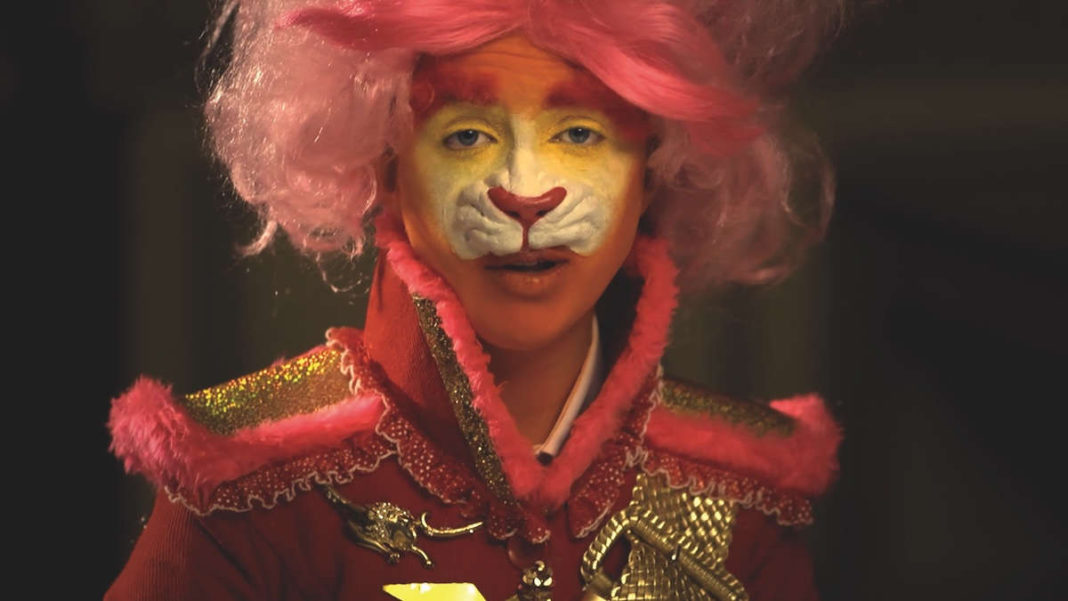
In some ways, exhibitions opening in September at two Berkeley galleries could not be more different. “Both Sides Now 10,” at the Worth Ryder Art Gallery Sept. 4-30, features film and video projects. It is described as a “dynamic mix of satire, experimental montage, speculative fiction and queer futurity, offering vivid insights into recurring themes such as media control, memory, labor and posthuman experience.”
“Sacred Mobility: The Travels of Hindu & Eastern Orthodox Holy Images,” at the Doug Adams Gallery Sept.11-Dec. 12, has as its theme, “The material manifestations of the sacred—gods, saints, divinity—move across space and time via physical transport and through replication and reproduction of images and objects.”
Looking more closely, connecting threads emerge: “memory, posthuman,” “move across space and time.”
“Both Sides Now 10” is the most recent collection of work from the U.K. and Hong Kong, selected from previous editions. Jamie Wyld of Bristol-based videoclub—an agency working with film, video and digital culture—co-curated the exhibition. He said, “The 10th edition brings together a selection of works from the past decade, tracing artistic responses to rapidly changing cultural, political and technological landscapes.”
He added, “[The exhibition] was originally inspired by the 20th anniversary of the handover of Hong Kong back to China from the U.K. in 2017. [For example], Ellen Pau’s [Diversion, 1990] was made during British occupation … . Including older works it allows us to revisit the ideas, aesthetics and concerns that shaped earlier editions, while newer pieces show how those threads have evolved or shifted.”
Asked if many of the works reflect continuing political tensions, he said, “Some explore themes of identity, memory and cultural change … Diversion reflects on personal and collective memory in Hong Kong through archival and found footage.”
Wyld noted that developments in creative technology have been an ongoing theme in “Both Sides Now.” He cited Angela Su’s The Afterlife of Rosy Leavers, which “explores virtual consciousness and the porous boundary between human and machine—themes that feel increasingly urgent for visual arts as technology becomes ever more integrated into our lives and bodies.”
“Sacred Mobility” was inspired “by the Bay Area’s diasporic communities,” according to gallery materials, and “explores the movement of sacred objects within Hindu and Eastern Orthodox traditions.”
Co-curators Justin Grosnick and Olga Yunak commented jointly by email, “[Yunak] was moved by her work on the collection of metal icons at Patriarch Athenagoras Institute in Berkeley, and how they were representative of objects that migrant families would bring from the Old World to the Bay Area. For [Grosnick], it was Hindu sacred figures carried or formed anew in places like San Francisco and Berkeley, as well as the South Bay.”
Asked how artworks help maintain community ties to their homelands, they said, “From our conversations with members of various diaspora communities, it became clear sacred objects—either new or old—were vital connectors … to homelands and other conceptions of ‘home,’ such as family, important memories, experiences of grace and peace. They also keep communities here … build up identities for them as communities living together in diaspora.”
All three curators responded to a question about potential audiences for these exhibitions.
Said Wyld, “‘Both Sides Now 10’ speaks to a diverse international audience. This includes experimental film and video art enthusiasts, digital arts and culture fans, and anyone curious about the ways U.K. and Hong Kong [artists] have engaged with shifting cultural landscapes over the past 10 years.”
He continued, “It’s also for those curious about how moving image can reflect, challenge and reimagine the world we live in. That includes people who follow contemporary art, as well as those new to video art open to encountering unexpected perspectives from both the U.K. and Hong Kong.”
Grosnick and Yunak stated, “The presence of God makes itself known not only in temples and churches, but also in surprising and often unexpected places and ways. The divine, especially through sacred objects, seems bent upon accompanying and consoling devotees and believers wherever and however they may find themselves.”
‘Both Sides Now 10,’ Worth Ryder Art Gallery, UC Berkeley Anthropology & Art Practice Building, Rm. 116. Sept. 4-30, free.
‘Sacred Mobility,’ Doug Adams Gallery, Center for the Arts & Religion, 2400 Ridge Rd., Berkeley. Sept. 11-Dec. 12, free.