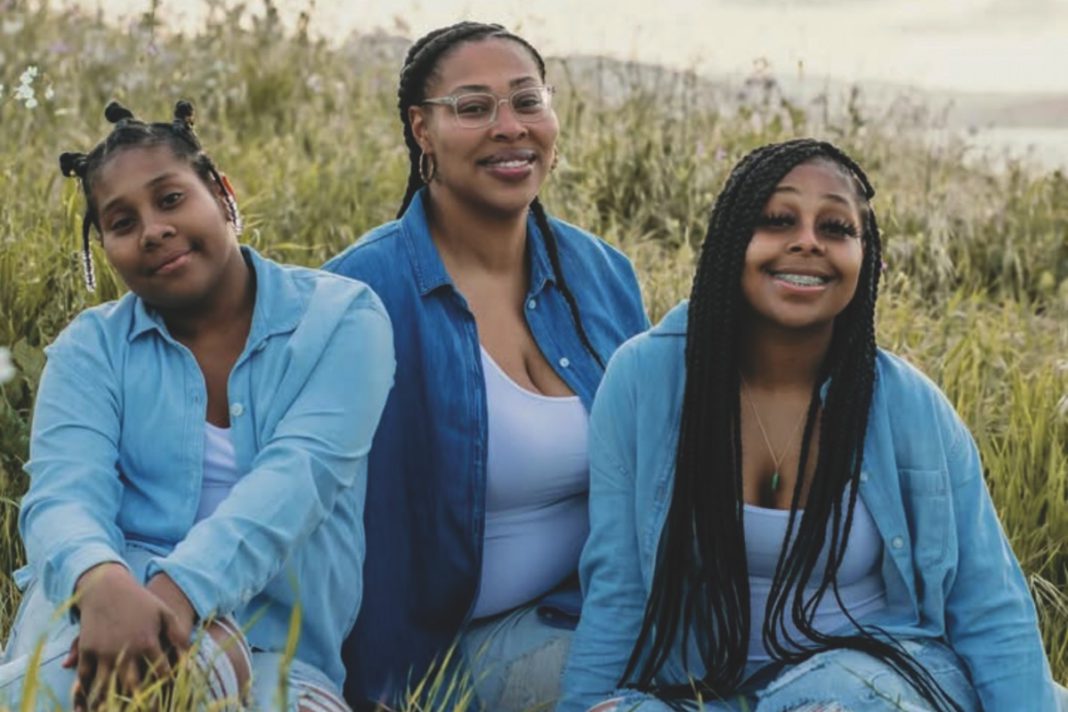
When Sheena Biggers first walked into a Berkeley Head Start, she was a 19-year-old mom, looking for a safe place for her young daughter to land while Biggers worked a part-time job. She sometimes lingered during morning drop-off, playing with her daughter’s classmates or keeping them company while they ate breakfast, and sometimes lending a hand to teachers.
“One day, my daughter’s teacher brought me an application to be a parent-intern teacher,” Biggers said. “I got my placement [at South Berkeley YMCA Head Start] in 2005, and I’ve been there ever since.”
The YMCA Head Start program pushed Biggers far outside of her comfort zone and changed the trajectory of her and her children’s lives for the better. “I learned a different way of raising children than what I had known, and then getting pushed by the YMCA to finish my education with her childhood development classes, I learned about patience, redirection over punishment, taking kids to the dentist early in life, going to well-baby visits,” Biggers said.
Working her way up from intern to classroom floater to head classroom teacher, she is now a proud 2025 graduate of Cal State East Bay. “Head Start is my second home—those children are my family,” she said. “Watching them graduate from high school or have families of their own feels so good to me. I had a helping hand in those lives.”
President Trump has threatened cuts from the Head Start program as outlined in Project 2025, but so far California Head Starts are reportedly hanging on, leaning more on state funds and less on federal funds. Last week a federal judge in Seattle blocked Trump’s directive to exclude immigrant children from Head Start.
“Mr. Trump lives in the White House, and before that he lived in a mansion,” Biggers said. “He has no idea what the struggles are like for those of us who are down here on the ground.”
Even while the program in California stays intact, many say the income eligibility requirements are unreasonably low—requiring that a family of three earn $34,000 annually to qualify and a family of two earn $27,000. The income threshold is so low that early in her career, Biggers nearly lost eligibility for her daughter to stay in the program with her modest salary.
“Other programs were quoting $300 a week and that simply wasn’t doable for me,” Biggers says. “The numbers are so low that many families in need miss out.”
Mimi, who became a single mom after experiencing domestic violence, earns around $80,000 annually but has almost nothing left after covering her rent which is $3,000 and her childcare at over $2,000 a month. “I’m not eligible for any government subsidies. And what I make doesn’t cover my expenses,” Mimi said. She declined to share her last name due to the sensitivity of her domestic violence case. “I experienced homelessness as a young adult, and that’s not something I want my young daughter to go through.”
Cynthia Ganote, a gender sociologist, says it’s high time for the federal and state governments to adjust the numbers so that families like Mimi’s can participate. Currently families of two earning $100,000, or three earning $112,00, are considered “low income,” and families of three earning under $71,000 are “very low income.”
“We know the cost of living in the Bay Area is so high that if the income eligibility numbers were raised so that they were on par with below-market-rate housing numbers,” Ganote said, “a larger number of kids would have access to those great outcomes that kids in Head Start have. Those benefits would also help families, communities and the entire state.”
If they had a magic wand, Ganote, Biggers and Mimi said they’d implement universal childcare so that all children and families in need would have access to programs like Head Start. “As the national government is unraveling with anti-DEI policies that decentralize and minimize the needs of kids and families,” Ganote said, “I hope that at least the state of California can continue to show resistance and can set an example for other states to follow.”