Movies are a visual medium. That little cliche nugget of wisdom about cinema that people like to bandy around has been stuck in my head since I watched two romances back to back this week.
Obviously it’s a true statement, because the illusion of a motion picture doesn’t even work unless one looks at it. Still, I’m not sure the visual component is actually more important than any other aspect of the cinematic experience. Give me a second and I’ll try to show my work.
Even though he’s only made two previous feature films, Kogonada is a genuinely exciting voice in cinema. His first film, Columbus, is a walk-and-talk, meet-cute romantic drama similar to Before Sunrise, but with a sly fascination with architecture and aesthetic beauty. His follow-up, After Yang, is one of my top 50 movies of the decade so far and a stunningly gorgeous sci-fi heartbreaker that luxuriates in the quiet beauty of its futuristic landscapes.
Kogonada is a student and an obsessive on the form of motion pictures. For years before making his first film, he released brilliant video essays analyzing specific films and television series that changed my appreciation and understanding of the art form. So to say I was looking forward to his new romance, A Big Bold Beautiful Journey, would be an understatement. I instinctively didn’t like the title—it reminds me a little too much of a Bill I pretty much despise—and something about the trailers seemed off to me, but this is Kogonada. It can’t be bad, can it?
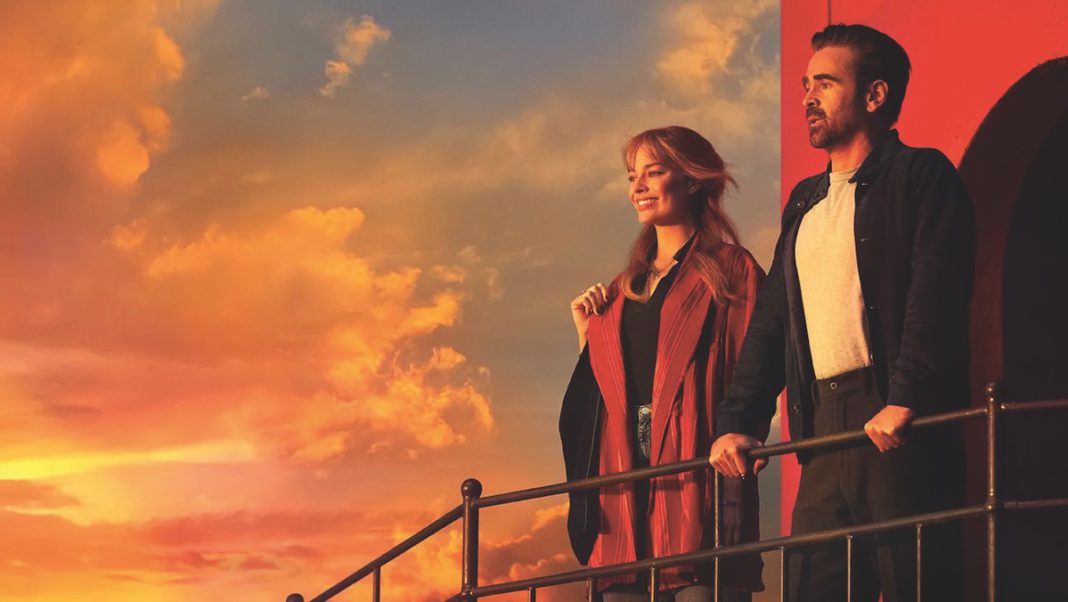
Oh, but it can. A Big Bold Beautiful Journey follows Margot Robbie and Colin Farrell as two mildly broken people, more bent than anything, who meet at a wedding and during a single road trip visit several literal doors to their past that help them understand their respective deep-seated traumas and show them the path to healing. Yes, that sounds like a cheesy set-up for a movie, but under the gentle and visionary guidance of Kogonada it still should have worked. But it doesn’t even come close.
Here’s what I mean about the limitations of film being seen primarily as a visual medium: Every single frame of A Big Bold Beautiful Journey is painterly and sumptuous. Kogonada and cinematographer Benjamin Loeb crafted a movie so beautiful to look at that it almost makes one forget the empty platitudes being foisted on the audience as apparent humanist truths. The script of this movie is so shallow, so empty of genuine human emotion and honesty, that it feels like the cinematic equivalent of a “Live, Laugh, Love” towel holder.
Still, it’s a visual buffet for the audience even while it cringe-watches the most blatant Burger King product placement one can imagine or while seeing Farrell and Robbie, who both do as well as they can with what they have to work with, look like they’re genuinely questioning their career choices. They are movie stars wandering around in what can only be generously considered a movie.
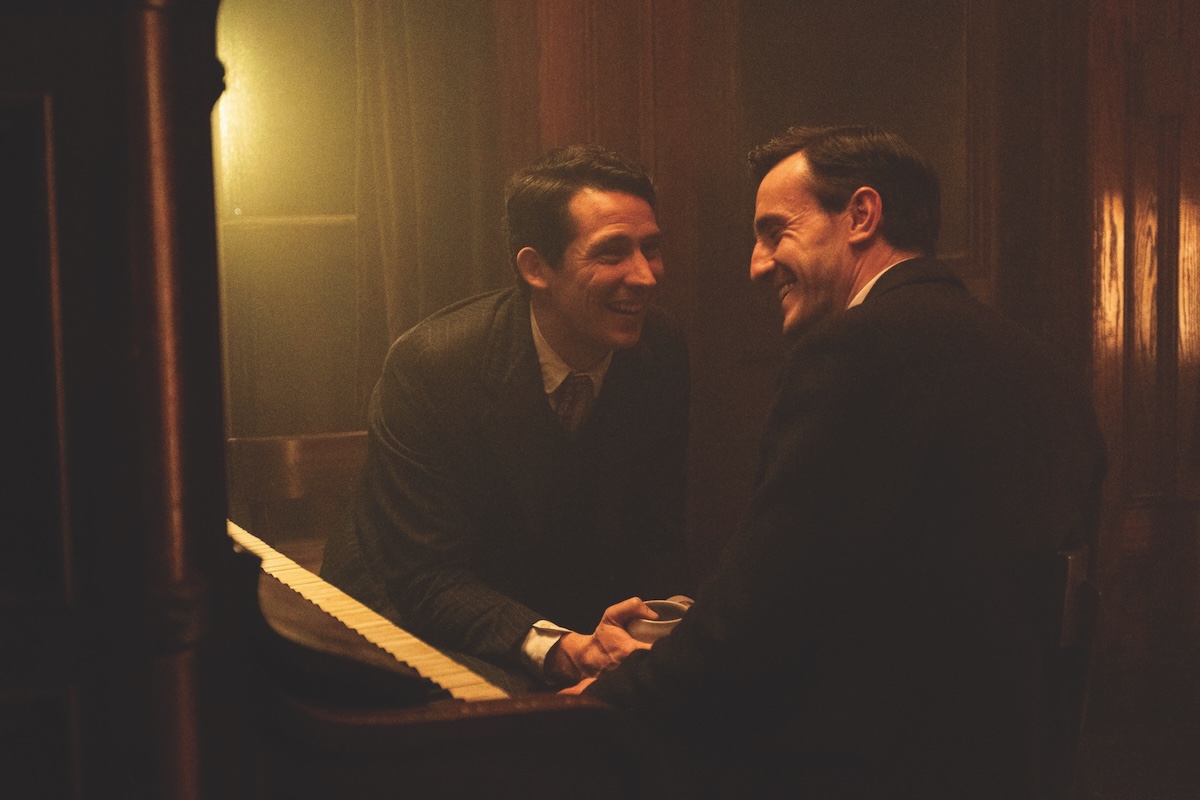
Then there is the other romance I watched, a quiet love letter to the eternal power of music and how it draws disparate aspects of humanity together, called The History of Sound. Two of the finest young actors working right now, Paul Mescal and Josh O’Connor, play two music students, one with an ear and one with a voice, who meet in a New England pub in 1917 and spend months of their lives walking across rural America and recording folk songs on wax cylinders while growing to hesitantly love one another.
Instead of shepherds, the main characters are ethnomusicologists. Their love is forbidden in the early 20th century, and they were both raised to believe they should marry and start families. So even as they make tentative steps toward intimacy and love with each other, neither of them knows how to fully commit to their connection.
And here’s where I try to tie it all together: Director Oliver Hermanus crafts the film with a gentle and unassuming eye. The film is handsome to look at, but it’s still mostly understated in its framing and compositions. He builds The History of Sound to find empathetic inroads to the characters’ inner lives rather than creating something visually transportive and without emotional resonance.
Because O’Connor and Mescal are so in the pocket and dialed in to the inner turmoil of these men and because the script from Ben Shattuck is so compassionate, and even though we’ve seen movies like this before and even though this one subtly avoids some of the more manipulative aspects of visual language of cinema, I was destroyed by the end of the film anyway. And so, it seemed, was everyone else in the theater. There was “not a dry eye in the house” that day, and I say that without hyperbole.
With performance, dialogue, subtext and emotion, The History of Sound tells a story more powerfully than A Big Bold Beautiful Journey and its expertly crafted visual voyage. Sure, at the end of the day, it’s the images we remember most from movies, but those images mean nothing if we don’t care about the feelings they summon in us. I’m still in awe of Kogonada as a storyteller and am going to chalk up ABBBJ as a well-meaning misfire in a career that will span many more singular works of art. But I’ll remember The History of Sound, and how it made me feel, forever. I bet everyone who watches it will, too.
A Big Bold Beautiful Journey
Grade: D+
The History of Sound
Grade: A-