
These days 19-year-old Karina, who asked that we not use her last name, has a hard time focusing on her health science classes because she can’t stop worrying about her mom. Karina’s parents immigrated to California more than two decades ago. Karina, her father and her siblings are documented but her mother is not—leaving the family in a constant state of fear.
“My mom is a person who loves to go out. She used to take my brother to school and practice, go for a walk while she waited for him, then shopping at the grocery store,” Karina says. “Now the only place she goes is work, but even that is scary.”
Karina’s mother cleans other people’s homes for a living, but is more cautious than ever in her own home. “My mom’s biggest fear is getting stopped by ICE and being sent back to Mexico,” Karina says. “It would be hard for my dad to carry the weight of all the family bills, and hard for all of us not having her around.”
Karina also worries about the wellbeing of her mom, who would be isolated if she were to be deported back to a place that she left behind 20 years ago. Karina is skeptical of President Trump’s description about who is and isn’t at risk of deportation.
“Supposedly only the worst criminals are being deported, but I know that’s not true because a lot of people taken away are not criminals,” Karina says. “It’s hard to believe this [mass deportation of criminals] is coming from a guy who is a convicted felon.”
Sanchez, who asked that we not reveal his actual identity for the safety of his colleagues, came to California from El Salvador when he was 7 years old. Although Sanchez, his mom and his grown siblings are all legal residents, he worries about the workforce in the warehouse he manages in Oakland.
“About 80% of the guys are immigrants. If they stopped coming to work, the place would shut down,” Sanchez says. He got a taste of what it would feel like without those workers on Feb. 3, when most of his team stayed home during the national day of protest against President Trump’s anti-immigration policies.
“We were stretched really thin that day,” Sanchez says. As an immigrant himself who did warehouse labor before being promoted to management and operations, Sanchez recalls feeling conflicted. “I felt a little caught off guard, but I also get that that was the point.”
Oakland resident Camilo Perez-Bustillo is a human rights attorney and scholar as well as a co-founder of Witness at the Border. Perez-Bustillo says that while fears have intensified under the current administration’s openly xenophobic/anti-immigration policies, immigration rights activists and attorneys have been busy for a long time.
“The rhetoric was different under the Biden administration, but there was actually more continuity in immigration, border policies and practices than people realize,” Perez-Bustillo says.
As President Trump has mobilized the United States military and declared there to be no safe spaces—not even hospitals, schools or churches—under the guise of his campaign commitment to “make America great again,” Americans may be forced to reconcile with the ripple and compound effects of folks not getting medical care, youth feeling afraid to attend school and communities being isolated from their support systems.
“What we’re really seeing is a domestic war on migrants,” Perez-Bustillo says. “When you mobilize the armed forces, you’re treating the very people who fuel the labor that keeps the country running like the foreign enemy. And this is the first time the provisions of the 14th Amendment [that guarantees citizenship to everyone born in the United States] are being tampered with.”
Contrary to the Trump administration’s campaign to narrow and sanitize the scope of history covered in schools to eliminate references to diversity, equity and inclusion, Perez-Bustillo says it’s more important than ever that people understand history and do what they can to impact change.
“The thing that gives me hope is the youth, who are mobilizing in their communities and acting in solidarity,” Perez-Bustillo says.
The American Civil Liberties Union (ACLU) states on their website that everyone, regardless of their immigration status, is guaranteed some rights under the constitution. The ACLU offers multilingual resources and scenarios of what to do in case of an encounter with ICE.
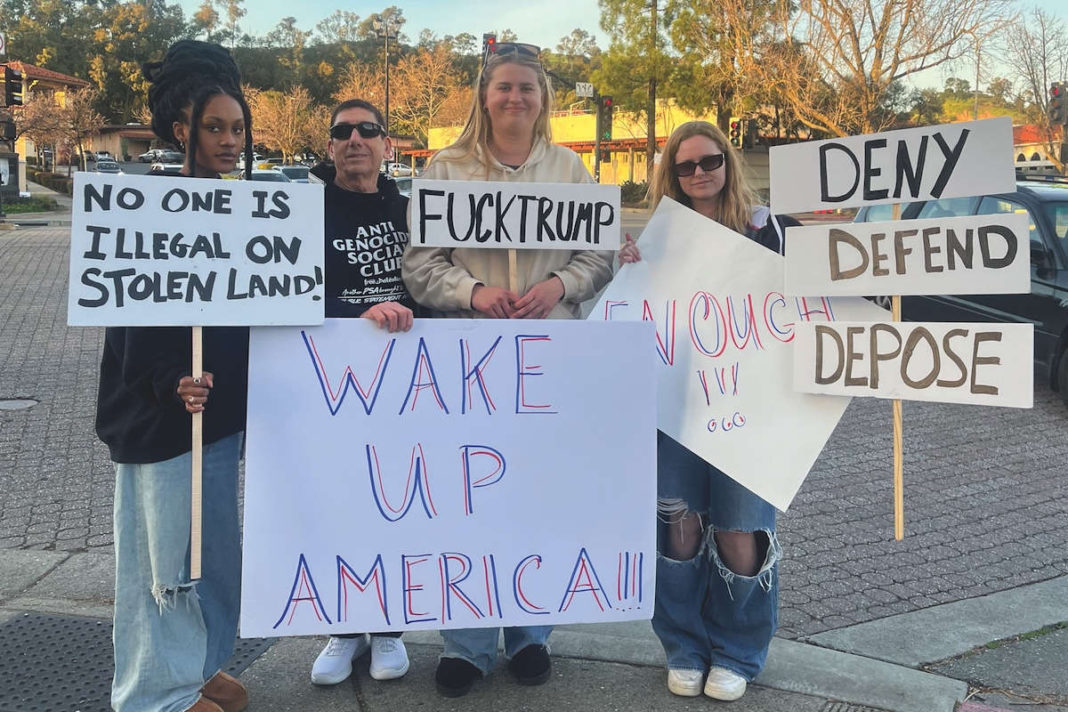
In the meantime, Karina says she hopes that even those with nothing to worry about stand in solidarity with families like hers.
“Educate yourselves and get informed,” Karina says. “And, protest.”