
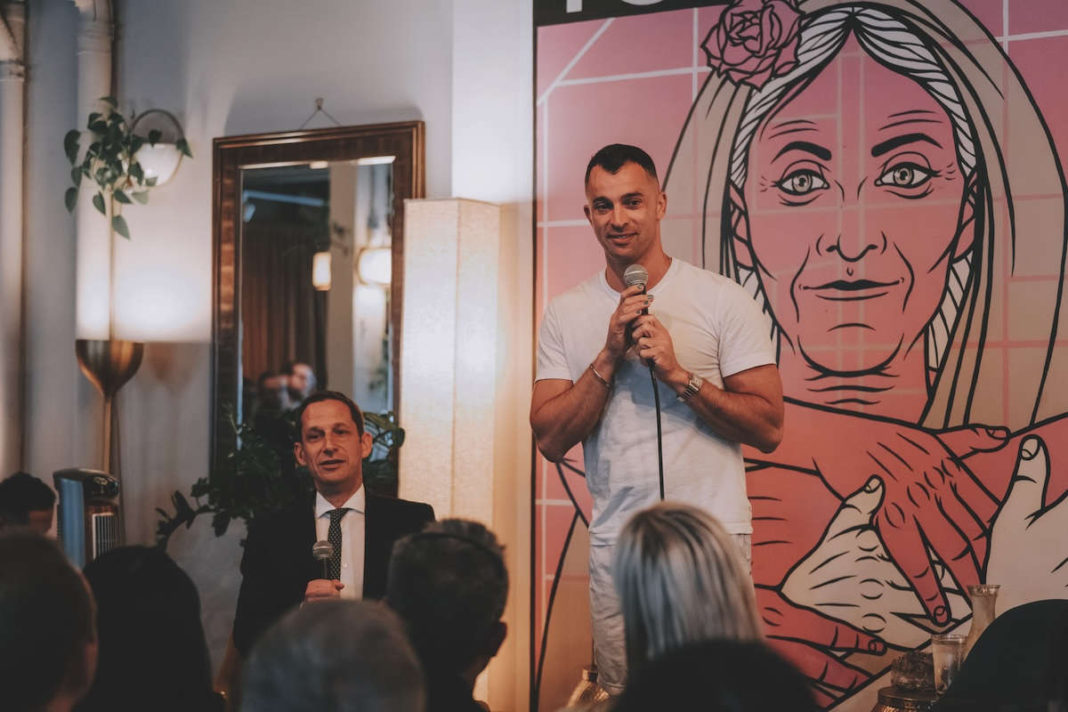
Manny’s, the cafe and community hub at the corner of 16th and Valencia streets in San Francisco, has been described in many ways: part cafe, part civic commons, part political hub. For Stacy Horne, who became the organization’s director of programming in March, the magic lies in the combination of atmosphere and conversation.
“The programming is what makes it very special and unique, along with the warmth and aesthetic of the venue,” Horne said. “We have lots of cozy, comfortable vintage furniture. Walking in, you’re immediately in this warm, welcoming environment. And then we present all kinds of speakers and ideas. There’s no topic we won’t touch.”
Horne oversees all of Manny’s public-facing programming, curating an eclectic lineup that spans politics, civic discourse, spirituality, addiction recovery, relationships and mental health. When major news breaks, she works quickly to assemble timely conversations that help the community process events together. Turnout depends on the topic, averaging around 50 attendees, with the biggest programs filling the room with as many as 150. With events scheduled nearly every day of the week, the calendar rarely has a quiet night.
Manny’s has built a sturdy base of supporters to sustain its nonstop calendar. Beyond an Instagram following of more than 13,000, the venue draws a steady stream of regulars, distributes a widely read newsletter and runs a sponsor program in which community members pay monthly dues to keep programming alive. Most events carry only a modest ticket price, which Horne noted helps cover costs while keeping the space accessible.
“We have a really robust community,” Horne said.
In a political climate marked by uncertainty and heightened polarization, many communities have experienced fear, stress and a sense of disconnection. Events and news cycles can feel relentless, leaving people anxious and searching for reliable spaces to process what is happening around them. Manny’s plays a critical role in this context, offering a calm, welcoming environment where residents can engage with current events thoughtfully. By hosting timely discussions, workshops and forums, the cafe provides both information and perspective, helping attendees feel informed and connected rather than overwhelmed.
The idea of a cafe doubling as a civic gathering space may feel unusual in 2025, but it fills a gap that has grown more pronounced in San Francisco over the past decade. The city has watched many of its traditional “third spaces”—places that are neither home nor work—disappear under the pressure of high rent, the pandemic and shifting consumer habits.
Independent bookstores, coffeehouses and performance venues once offered residents opportunities to come together around culture and ideas. Today, those spaces are fewer and farther between. In that context, Manny’s has carved out a distinctive niche: a hybrid of coffee shop and civic classroom that feels both old-fashioned and urgently relevant.
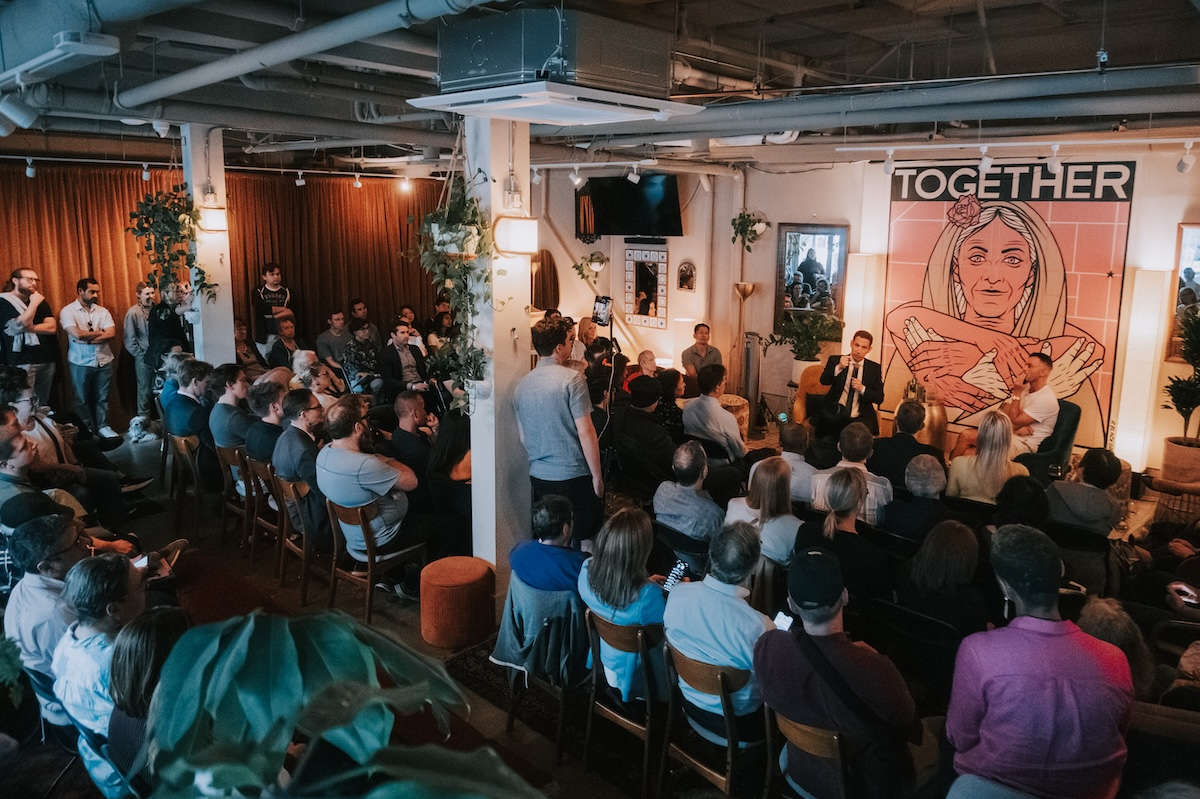
Horne views her work as more than booking speakers; it’s about cultivating a space where people can gather, learn and connect in a city where isolation has become a defining concern. That perspective has led to an expansion in programming, with Manny’s now hosting a wide range of workshops that encourage participants to speak openly about the issues they care about and the events shaping their lives.
The cafe has become as much a forum for dialogue as it has a venue for listening. Operating outside the nonprofit model gives Manny’s additional freedom, and its openly partisan stance allows for frank, unfiltered conversations on pressing issues.
“It’s really about giving people a voice and community building,” Horne said.
The work is not without its challenges. Creating a civic space in today’s polarized climate requires navigating disagreements and, at times, outright hostility. Horne shared that Manny’s has been the target of attacks, including graffiti on the site. Still, the venue continues to thrive in a city that mostly shares its political standing.
In some ways, those tensions are a testament to the space’s visibility. Few other venues in San Francisco attempt to host explicitly political programming multiple nights a week, and fewer still make it as accessible. Manny’s charges modest ticket prices, relies on community sponsors and keeps its doors open to anyone curious enough to walk in.
For now, the focus is on sustaining Manny’s as a viable civic space, but the organization also has longer-term ambitions. The goal is to ensure that people recognize it as a welcoming environment, with plans to eventually expand into other parts of the Bay Area in response to community interest.
“Our No. 1 priority is to continue to listen to people and keep these lines of communication open,” Horne said.
Manny’s, 3092 16th St., San Francisco. Open daily 9am to 8pm. 415.896.4052. welcometomannys.com