BAMPFA’s ‘Shitamachi’ series visits the Japanese capital’s lowdown side
In common with urban dwellers everywhere, residents of Tokyo have developed a long-standing, complex body of folklore on the subject of their city’s cheap-rent, working-class districts.
The cinematic aspect of that folklore takes the spotlight this summer—now through July 29—at the Berkeley Art Museum Pacific Film Archive, where the series “Shitamachi: Tales of Downtown Tokyo” gathers together 12 films that pay tribute to the spirit of shitamachi—literally, the traditional “low city” part of town, dating from the time when Tokyo was known as Edo.
Shitamachi was home to coppersmiths, fishermen, rickshaw pullers, shopkeepers and other laborers and tradespersons, in addition to the colorful “low characters” that make movies so irresistible: samurai, geisha, gamblers, gangsters and prostitutes. The people of the flatlands on either side of the Sumida River in Northeast Tokyo; the marginalized denizens of narrow alleyways, bars and pachinko parlors; the salt of the earth.
Guest curator Aiko Masabuchi, in coordination with BAMPFA’s Kathy Geritz, chose titles from some of Japan’s most celebrated filmmakers, with an eye to the broad scope of “downtown” narratives, from the Tokugawa period to the present day.
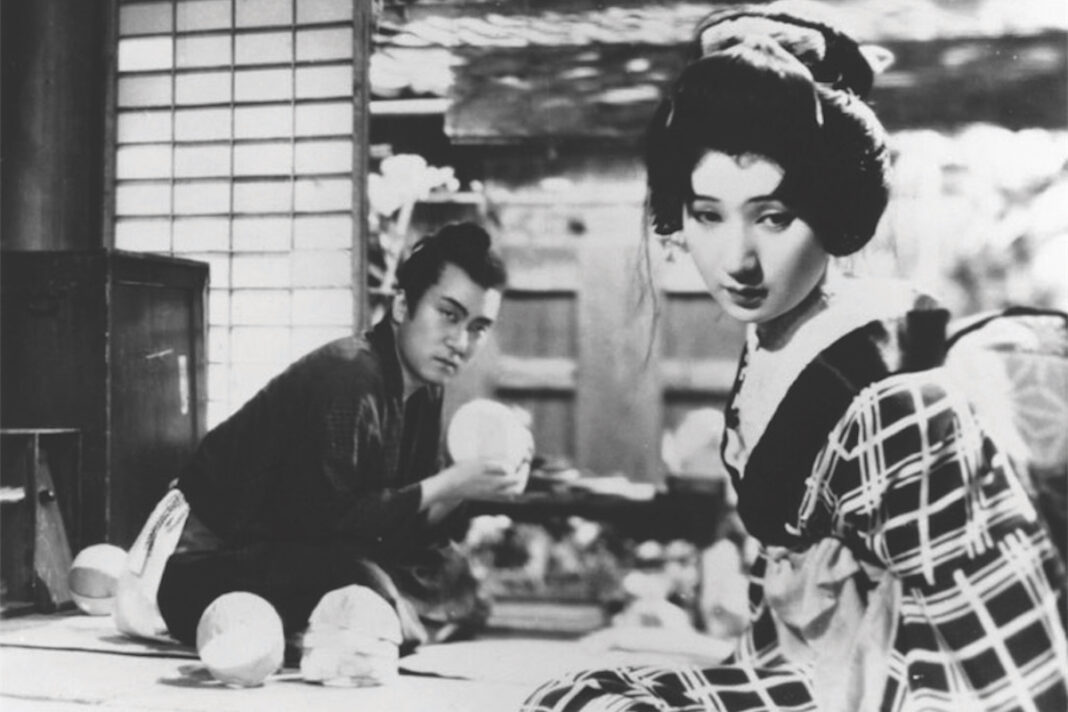
Humanity and Paper Balloons (Ninjo kami fusen), a panoramic 1937 drama directed by Yamanaka Sadao and presented in an imported 35mm print, is seldom seen stateside, but it’s a gorgeously wrought portrait of the poor side of town in the 18th century. Unno Matajuro (played by Kawarasaki Chojuro) is a masterless samurai who lives with his wife next door to the neighborhood scamp, Shinza the barber (Nakamura Kan’emon), who runs his own gambling den at home in defiance of the local crime boss.
Fluttering around the frame, like moths to a flame, is an assortment of ne’er-do-wells trying desperately to get over: a nosy fishmonger, a stingy landlord, the crime bosses’ cruel enforcer (Katô Daisuke, familiar pig-faced knockabout from Seven Samurai, etc.), a blind masseur, a haughty rich man and the cynosure of all eyes, Okoma (Misaki Takako), the beautiful daughter of a pawnbroker. Murder, suicide, kidnapping and commedia dell’arte-style dialogue all take place on the way to the yarn’s climax at Hell King Pavilion Bridge.
Director Yamanaka lost his life in the Japanese invasion of Manchuria at age 28, leaving this final film, released just before he was drafted, as a splendid farewell. The scene of raucous comic dancing at a wake, while the neighborhood children giggle, is a perfect illustration of the shitamachi milieu, and the lone samurai’s moral dilemma points out one of the cardinal rules of the game—in houses with paper-thin walls it’s easy to eavesdrop on your neighbors. Humanity and Paper Balloons screens at BAMPFA on June 28.
Record of a Tenement Gentleman (1947) is a relatively lesser-known character study from writer-director Ozu Yasujiro’s large catalog of exquisite tearjerkers, the story of a lonely widow (Ozu regular Iida Chôko) and her encounter with a little lost boy. The child actor who portrays the kid, Aoki Hôhi, only appeared in six movies—three of them by Ozu. But his portrayal of the seemingly unwanted waif, a sullen bed-wetter who has no spoken lines until late in the film’s fourth quarter, is pure weepy magic. The combination of Iida’s gruff-yet-motherly face, the boy’s wounded expression, Ozu’s lovely compositions and Saitô Ichirô’s warm-blanket musical score works its wonders unforgettably. It plays July 6.
Writer-director Kore-eda Hirokazu followed Ozu’s footsteps 57 years later with his Nobody Knows (2004), the wholeheartedly pathetic tale of what happens to a family of young kids when their alley-cat mother abandons them in their Tokyo apartment. Kore-eda’s screenplay, based on a true story, is brought to the screen with a miraculous sense of cool irony mixed with heartbreak, as the siblings learn to get by on their own. Or not. One of Kore-eda’s finest, it shows on July 9.
Also in the series are appropriately lowdown humanitarian features by Kurosawa Akira: Ikiru, recently remade in the U.K. with actor Bill Nighy as Living, and Drunken Angel starring Mifune Toshiro; Kawashima Yuzo’s Suzaki Paradise: Red Light District; Tanaka Kinuyo’s 1953 Love Letter, in a new 4K restoration; Yamada Yoji’s Shitamachi Sunshine; and Gosho Heinosuke’s influential kitchen-sink drama Where Chimneys Are Seen.
A CULINARY-CINEMATIC NOTE: The ideal pre or post-movie snack for this series would have to be oden, a shitamachi example of comfort food. The nabemono-style soup consists of fish cakes, hard-boiled eggs, deep-fried tofu, daikon and konjac, in a dashi broth. Alongside the steamed egg custard chawan mushi, these two homey, soothing dishes are the stuff that downtown Tokyo dreams are made of. Umai!
Through July 29 at BAMPFA